
Today we celebrate World Health Day.
Health is a broad concept. The WHO defines it as a state of complete physical, mental, and social well-being, not just the absence of disease. Understanding brain health is essential to achieving this complete state.
At the School of Life and Health Skills, we view health as a vital process. We are the main characters and responsible agents of this journey. We can all lead our own health. We just need to learn about the resources that impact us positively and use them daily.
A year ago, the pandemic shook the structures and habits supporting our health beliefs. One area where we see the most decline is mental health.
Mental Health or Brain Health?
When looking for a clear definition of mental health, we turn to reliable sources. MedlinePlus connects mental health to emotional, psychological, and social well-being throughout life. Their page explains further:
It affects how we think, feel, and act as we face life. It also helps determine how we handle stress, relate to others, and make choices. Mental health is important at every stage of life, from childhood and adolescence through adulthood and aging.
Therefore, mental health involves lifelong learning. We must develop skills to handle daily events. Lacking these resources, or not knowing how to use them, reduces our mental well-being. This can open the door to mental illness, which can affect anyone at different levels.
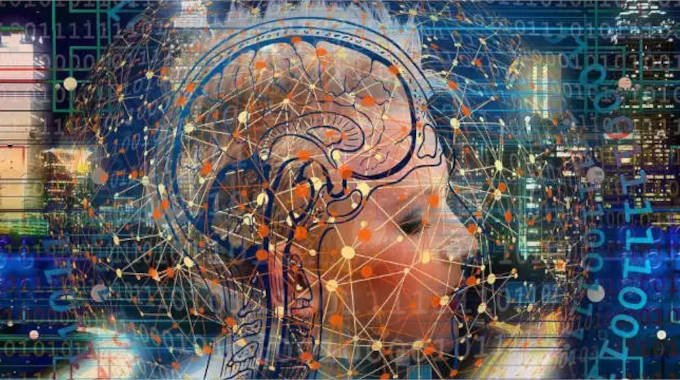
Another concept gaining ground is brain health. As we learn more about the brain and neuroplasticity, we see how neural networks develop. Modern technology and measurements prove that these networks can regenerate.
How Do We Develop and Maintain a Healthy Brain?
The concept of brain health includes cognitive aspects, not just emotional ones. It incorporates resilience. Brain health refers to the ability of neural cells and circuits to regenerate. It also involves the nervous system’s capacity to define new neural pathways. This helps us develop new skills, integrate resources, and learn.
This capacity of the brain and neural networks is closely linked to our human ability to explain things to ourselves. It helps us find new meanings and internal purpose in external events.
We can find more about this concept on the Institut Guttmann website. They define brain health as the development and preservation of neural networks throughout the life cycle. They highlight that:
A healthy brain allows us to enjoy a full life. It helps us recover from traumatic experiences, injuries, and various illnesses. A healthy brain is the key to a satisfying life.
Determined to Unite Knowledge
At the School of Life and Health Skills, we choose to unite rather than divide. For this reason, one of our core guiding principles is Consilience, the unity of knowledge.
For centuries, scientific and medical training has focused on fragmentation and extreme specialization. This approach often overlooks how everything is interconnected at both organic and environmental levels.
William Whewell coined the term Consilience in 1840. However, it only became popular in the late 20th century through Edward Wilson. He is famous for his research on the social organization of ants.
Today, on World Health Day, we received news that confirms the importance of looking at ourselves as whole, interdependent beings. The report shows the link between cardiovascular health and brain health. A study by the National Center for Cardiovascular Research (CNIC) and the Barcelonaβeta Brain Research Center (BBRC) shows a clear link. Cardiovascular risk factors are associated with lower brain metabolism in the same areas affected by Alzheimer’s. Crucially, this decline begins at an early age.
Thus, as researchers state, controlling modifiable risk factors could prevent up to one-third of Alzheimer’s cases.
Our Mission Is Lifelong Health
We offer an educational home space to help you preserve your health through Salutogénesis. We promote full health through life skills training. As the WHO declared in 1999, this is key to facing a complex and uncertain world with optimal mental, brain, and global health.
In 2014, the WHO updated its definition of mental health as follows:
Mental health is defined as a state of well-being in which every individual realizes their own potential, can cope with the normal stresses of life, can work productively and fruitfully, and is able to make a contribution to their community.
WHO
Salutogénesis is the scientific process and theory that encompasses mental, brain, and global health. At the School of Life and Health Skills, you can find educational content and courses based on Salutogénesis to connect your health with your purpose.
This renews and empowers us. It helps us feel that our life is comprehensible, manageable, and meaningful. In this way, you will find the options to express your full capacity for adaptation and self-leadership.
