
In recent years, there has been more and more talk about the phenomenon of the burnt-out teacher or teacher burnout. With this article, we want to show that it is not simply tiredness: it is a deep exhaustion that affects the body, the mind, and, above all, the soul of those who dedicate their lives to teaching. Behind every teacher who feels empty, there is a story of silent dedication and love for their students that, little by little, has been extinguished under the weight of demands.
Speaking of teacher burnout is not about pointing fingers, but about extending a hand of understanding and hope to all those who feel that their vocation is being consumed in silence. We want to bring you our Salutogénesis perspective on this issue that is only growing.
When teaching becomes too tiring
There are mornings when the classroom feels heavier than the backpack of a teenager full of homework and exams. The teacher walks in, looks at their students, and instead of feeling enthusiasm, feels anxiety and an emptiness that has accompanied them for weeks and is withering their soul. It is no longer a matter of “being a little stressed,” it is a deeper feeling: energy is depleted, motivation slips away, and every day feels like an endless uphill climb.
It is an unpleasant experience that even vacations cannot fix.
This has a name: burnt-out teacher or teacher burnout.
According to data from the WHO and UNESCO, more than 50% of teachers have experienced symptoms compatible with burnout in the last two years. In Spain, a study of more than 13,000 teachers (USTEC-STEs, 2024) revealed that workload overload, bureaucratic pressure, and mental health problems in classrooms are pushing thousands of teachers to the limit.
Burnout is not a sign of individual weakness, but the alarm of an educational system crying out for help. A system that, paradoxically, is burning out those we need most: the teachers and educators who sustain the learning and emotional health of new generations, as well as their own.
The people to whom we delegate our children’s dreams feel exhausted. Our teachers are burnt out.
What is teacher burnout?
The term burnout literally means “being burnt out.” It is not a passing tiredness or a bad day in class: it is a syndrome recognized by the World Health Organization (WHO) as a result of chronic workplace stress that has not been successfully resolved or managed.
In the case of teachers, the burnout manifests when the vocation to teach —that spark that one day ignited the desire to educate— is extinguished by overload, lack of support, and constant pressure.
The three classic components of the burnt-out teacher, described by psychologist Christina Maslach, a specialist in burnout, are:
- Emotional exhaustion: feeling drained of strength, physically and mentally, even before starting the day.
- Depersonalization or cynicism: losing empathy and enthusiasm, coming to view students or colleagues with indifference or irritation.
- Low personal accomplishment: perceiving that nothing one does has an impact, that the effort is not worth it.
When these elements combine, the result is not just individual discomfort in the form of a burnt-out teacher: it is a collective problem that impacts the school climate, educational quality, and the mental health of the entire community. And, unfortunately, if you do not have a Mental Health and Well-being Plan in your school there is a risk that you will have to face these types of situations.
That is why talking about teacher burnout is not just a matter of personal well-being; it is a matter of educational public health.
Main causes of the burnt-out teacher
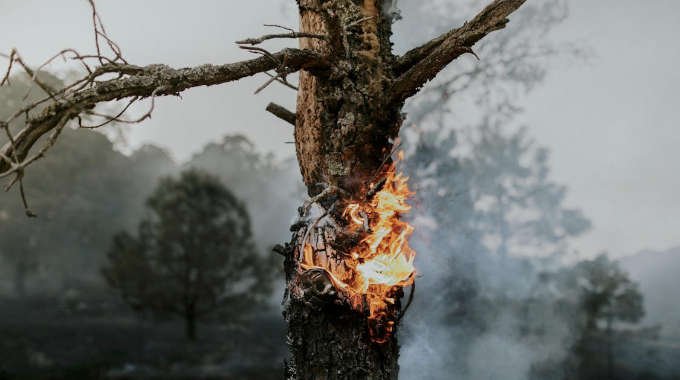
As you can imagine, teacher burnout does not appear overnight. It is more like a candle that burns brightly until, little by little, it consumes itself. Each spark of initial enthusiasm can be extinguished when the environment does not offer enough oxygen to keep the flame alive.
That spark of the teacher who begins their vocation in a school or high school and wishes to ignite the inner flame of each student so that their dreams shine and stoke their passions, gradually disappears.
Disappearing until it vanishes completely.
On a practical level, we can group the most common causes that fuel this syndrome into 4 groups:
Work overload and bureaucracy
The passion for teaching is suffocated by endless administrative tasks, massive grading, meetings, and demands that leave little room for what is essential: being present in the classroom and accompanying students. The mental kills creativity. Reason destroys the heart.
Lack of resources and institutional support
Many teachers feel they fight a daily battle without the necessary tools. From high student-to-teacher ratios to a lack of support staff or materials, the feeling of “juggling with empty hands” is constant. This is something that school directors have expressed to us in multiple personal interviews with phrases like: “our teachers are not trained and prepared for the young people who are coming up now.”
Relational problems
Relationships with students, families, and colleagues can become a source of tension. Conflict in the classroom, pressure and overprotection from families, or a lack of cohesion in teaching teams gradually wear down confidence and motivation.
Professional insecurity and constant changes
Educational programs change, regulations are modified, and projects are interrupted. This unstable ground makes many teachers feel they are building their work on quicksand.
Altogether, these causes turn the classroom into demanding and, at times, hostile terrain. But let us not forget the most important thing: burnout is not the teacher’s fault, but a symptom that the system needs to be rethought.
Symptoms and warning signs of the burnt-out teacher: how to recognize it in time?
Burnout usually appears in a stealthy way, without making much noise, disguised as common tiredness. But when we dare to stop and look closer, we discover that there are signs that speak loudly. Sometimes they are expressed in the skin, other times in the mood, others in the stomach, and many in the way of looking at students.
María, 42 years old, Language teacher with teaching overload
For months she has been waking up with the same thought: “I can’t take it anymore.” She used to love reading aloud to her students, or letting them read, but now she feels that every class is a mountain that is too steep. Her administrative work along with the growing difficulty of managing her students has increased her feeling of overload. Her nights are a loop of insomnia and her morning coffee is no longer enough to wake her up. Her smile has become a mechanical gesture, and every day she thinks she doesn’t know where to find the spark that one day made her a teacher.
Jordi, 35 years old, burnt-out Science teacher living with anxiety
He was never one to lose his patience. He was completely connected to his subject and his purpose of shaping little souls and catapulting dreams. But lately, he notices that irritation visits him in every detail: a student who doesn’t do projects, an endless meeting, one more email from the administration. Anxiety has invaded his body and he is starting to respond with sarcasm, something that had never been part of his character. Upon returning home, he is surprised by how cold he feels, even with his family. He wonders in silence what is happening to him, without knowing that his empathy is being extinguished under the weight of exhaustion.
Ana, 29 years old, demotivated Kindergarten teacher in charge of the little ones
Her passion was always the youngest ones. But now the enthusiasm for preparing activities has turned into apathy. She feels so demotivated that she no longer innovates, barely improvising to get by. She shuts herself in the staff room during her few free moments, avoiding chats with her colleagues because she feels she doesn’t even have the energy to converse. Sometimes she fantasizes about leaving it all, even though she knows she loves teaching. That contrast breaks her inside.
The Salutogénesis perspective: transforming discomfort into an opportunity for growth
Every story is different, but the background is the same: when the body, mind, and spirit send warning signs, it is not weakness… it is a call to stop and take care of oneself. Burnout does not shout suddenly; it whispers first. Listening to those voices is the only way to recover the path before the flame goes out completely.
Because, what we sometimes forget is that, even in the ashes, embers remain. And all it takes is a breath of fresh air, a space of care, a supportive network, for those embers to catch fire and the spark to ignite a huge fire. The fire of renewed and reinforced passion.
This is where Salutogénesis comes in to renew everything, coming to the rescue as an innovative proposal. If you remember, we already talked about Salutogénesis applied in schools to address the risk of mental illness. And the thing is, Salutogénesis has an approach that invites us to look beyond risks and illnesses. We find the assets that generate health because it is the foundation and evidence that opens a new path for teachers. Instead of asking “what makes us sick?”, it guides us to explore aspects such as:
- What sustains me?
- What strengthens me?
- What gives me meaning?
Imagine a staff room where teachers, instead of carrying more lists and bureaucracy, have real moments to cultivate their life skills, share what inspires them, and connects them to the teaching vocation. A space where tiredness is accompanied by self-care strategies, where isolation dissolves in the strength of the group, and where each teacher remembers why they chose to teach one day.
Because teaching is not just transmitting knowledge.
Teaching is touching lives, impacting souls.
And when a teacher feels supported, valued, and in alignment with what they love, their energy multiplies. Students perceive it, the school is transformed, the community flourishes.
Burnout does not have to be the end of the road. It can become the beginning of a profound transformation. Because the opposite of being burnt out is not simply “resting”: it is burning again with purpose, enthusiasm, and meaning.
And that fire, when ignited, does not only illuminate the teacher. It illuminates an entire generation.
Conclusion to heal the burnt-out teacher: Let’s take care of those who care
Perhaps while reading these lines, you felt an echo in your own experience. Perhaps you saw yourself reflected as a burnt-out teacher in María, Jordi, or Ana. Perhaps you even recognized in one of your colleagues that flame that is slowly going out.
Let me tell you something with all clarity and all affection: you are not alone.
Being a teacher is much more than a job; it is an act of love, of dedication, of sowing the future in fields that sometimes seem barren. But even the driest land can bloom again when it receives water, care, and light. You too deserve that care. You too deserve to shine again, because that is who you are, just as you are.
Today you have the opportunity to transform tiredness into strength, apathy into purpose, and exhaustion into a new beginning. It is not about doing everything at once, but about starting with simple steps, with clear strategies that help you recover your well-being and your vocation.
That is why we have prepared an exclusive resource for you: a practical Checklist with Salutogénesis strategies for you to activate your mental health and well-being. It is a hug in the form of a guide, designed so that you have reminders and concrete steps at hand to restore your balance and energy.
Access the free resource now by leaving your details in the form. Do it for yourself, for your vocation, for those students who await your bright gaze.
Because when a teacher takes care of themselves, they do not only save themselves: they change the life of every student they touch.
And that is the true miracle of education.